A barista on North Santa Cruz Avenue, a nursing assistant heading home from a shift off Pollard Road, and a parent who coaches Saturday youth soccer may all type the same search into their phones: American Red Cross CPR and First Aid certification classes in Los Gatos, CA. Their reasons differ. One needs a certificate for a new job, one is renewing a workplace requirement, and one wants to know what to do if a player collapses on the field.
American Red Cross training generally falls into four groups: CPR, First Aid, CPR/AED, and combined First Aid/CPR/AED courses. Some cover only adults, and others add child and infant skills. The right choice depends less on the course title and more on what your employer, school, or licensing program actually asks for. That question runs through the rest of this guide.
Key takeaway: People in Los Gatos can choose among American Red Cross CPR, First Aid, and combined CPR/AED courses. Which one fits depends on whether the training is for a job, a school program, a childcare role, or personal readiness. Confirm the exact course name your organization requires, then look for a local class that includes any hands-on skills session you need.
What Do American Red Cross CPR and First Aid Classes Teach?
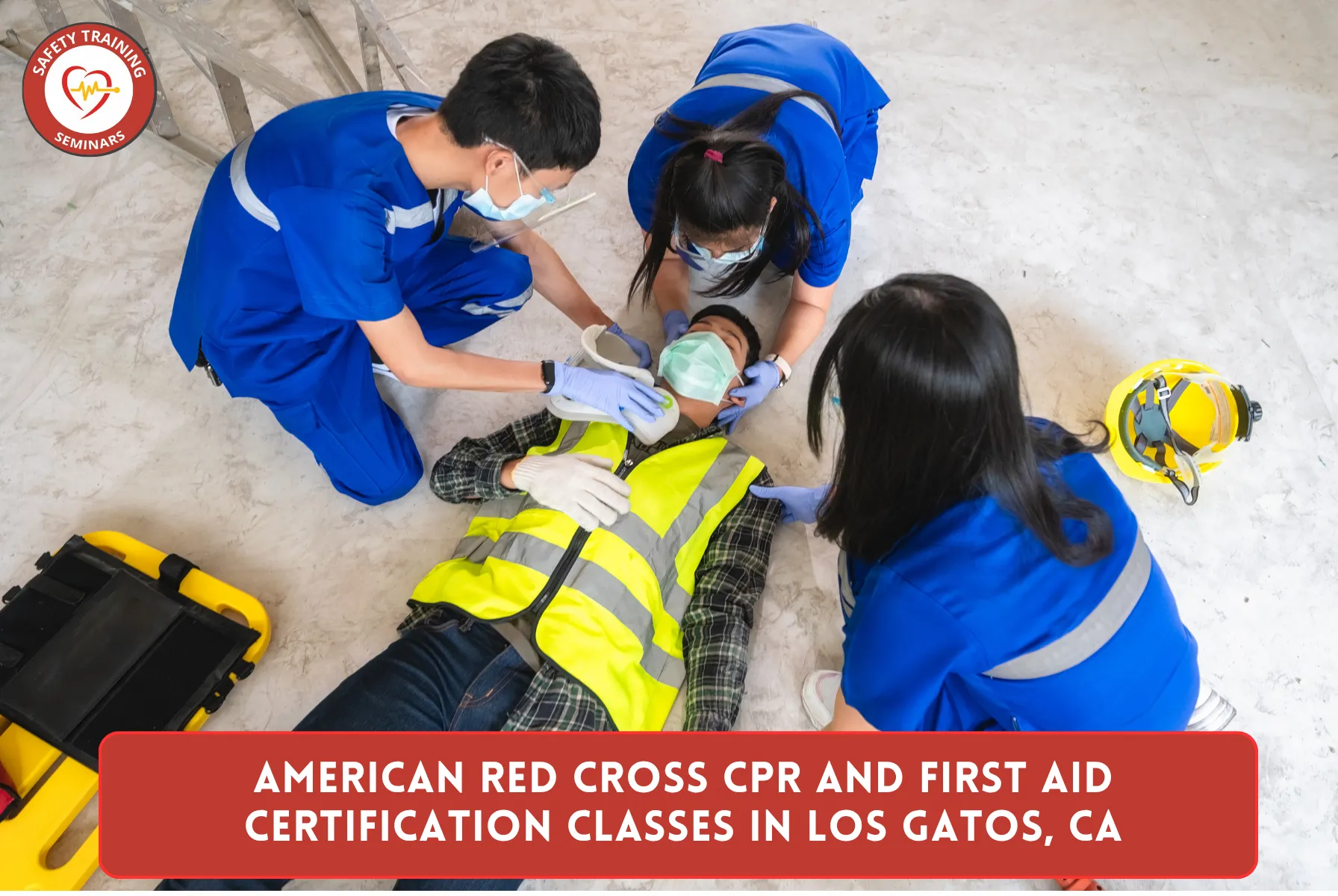
CPR training covers what to do when someone is unresponsive and not breathing normally. Learners practice recognizing the emergency, calling for help, and giving chest compressions and breaths until advanced care arrives. First Aid training covers a wider range of problems, including injuries, sudden illness, breathing difficulties, and heat- or cold-related emergencies.
AED training connects the two. An automated external defibrillator is built for bystanders to use during sudden cardiac arrest, and many CPR courses teach AED use alongside compressions. That is why so many course names combine the terms, such as CPR/AED or First Aid/CPR/AED.
The subjects are usually taught together because real incidents don’t stay in one category. A diner who feels faint at a downtown restaurant may need a First Aid assessment first and CPR only if their condition gets worse.
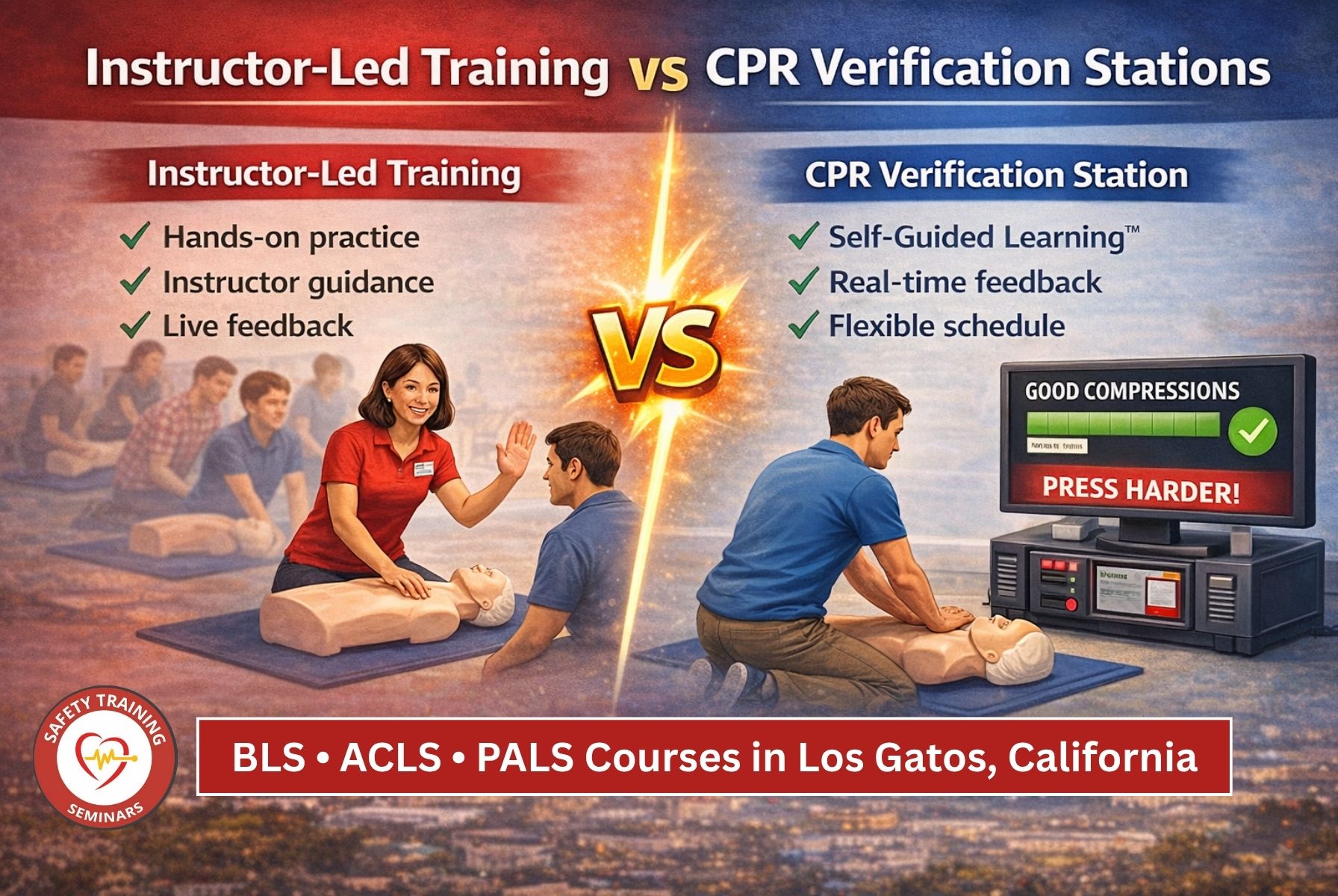
The American Red Cross offers several course formats. One common option is blended learning, where you finish an online portion first and then attend an instructor-led skills session. Content, format, and certificate details differ from course to course, so read the specific class description before you enroll.
CPR Training: Adult, Child, and Infant Skills
CPR classes don’t all cover the same age groups. Some focus on adult CPR, which is often what general workplaces look for. Others add child and infant techniques, which use different hand placement, compression depth, and breathing methods.
For many Los Gatos households, the pediatric skills matter most. The town has its own elementary and middle school district plus Los Gatos High School, and plenty of residents care for young children or grandchildren. For these learners, a course that covers both adult and pediatric CPR may be more useful than an adult-only option.
Hands-on practice is the other thing to check. Pushing on a manikin with real force, timing breaths, and placing AED pads builds physical memory that reading alone can’t provide. Many employers and programs expect certification that includes an in-person skills component. If yours does, an online-only course may not meet the requirement.
First Aid and AED Training for Everyday Situations
First Aid training covers much more than cardiac emergencies. American Red Cross First Aid courses teach learners to recognize and respond to a range of injuries and sudden illnesses, though the specific topics depend on the course version.
Los Gatos offers plenty of settings where these skills apply. Runners, cyclists, and families use the Los Gatos Creek Trail and Vasona Lake County Park, and hikers and riders head into the hills toward the Santa Cruz Mountains. A trail fall or heat illness on a summer afternoon calls for First Aid long before it might call for CPR.
People who often look into First Aid/CPR/AED training include:
- Teachers, classroom aides, and after-school staff
- Childcare providers, nannies, and babysitters
- Coaches and fitness instructors
- Restaurant, retail, and salon employees
- People caring for older family members
- Employees designated as workplace first responders
Who Typically Takes These Classes?
Healthcare and medical support staff
El Camino Health runs a hospital on Pollard Road, and the area has many medical, dental, and therapy offices. Clinical roles often require a healthcare-provider-level CPR credential. Support roles, such as front desk, patient transport, and in-home caregiving, may call for CPR or First Aid instead. Your employer decides which one applies.
Teachers and childcare providers
Schools and childcare programs often set CPR and First Aid expectations. California licensed childcare has its own pediatric First Aid and CPR training rules, so check with your program or the state’s Community Care Licensing office before choosing a class.
Workplace employees
Federal OSHA standards require trained first-aid responders at workplaces that don’t have a clinic or hospital nearby, and many employers designate trained staff either way. Office teams, gyms, and restaurants can all fall into this group.
Students, coaches, and family caregivers
Students entering clinical, internship, or teaching programs may need training as a condition of enrollment. Youth sports leagues and fitness studios often ask coaches to keep a current certification. Parents and caregivers who aren’t required to train often choose to anyway.
How to Choose the Right CPR and First Aid Course
| Training Type | Typical Use |
| CPR | Recognizing cardiac and breathing emergencies and performing CPR |
| First Aid | Responding to common injuries and sudden illnesses |
| CPR/AED | CPR skills combined with AED use |
| First Aid/CPR/AED | Broader training that covers injuries, illness, CPR, and AED use |
Use this table as a general guide only. It does not tell you what any particular employer or agency requires. Before registering, confirm these details:
- The exact course name on your requirement, including whether it says “adult and pediatric”
- Whether an in-person skills session is required, or whether an online-only course is acceptable
- The certificate validity period your organization accepts
- Who needs a copy of your certificate, such as HR, a school coordinator, or a licensing agency
A quick question to your employer, school, or safety coordinator now can save you from retaking a class later.
Training Considerations Specific to Los Gatos
Los Gatos sits where Highway 17 meets Highway 85, at the foot of the Santa Cruz Mountains. Many residents commute north into Silicon Valley or south over the hill toward Santa Cruz. For commuters, a class near home is often easier to schedule than one near the office.
Much of the local economy runs on small businesses, including the restaurants, boutiques, and wellness studios along the downtown corridor. Small teams mean that one or two trained employees may be the only responders on a given shift. Campbell, Saratoga, and Monte Sereno have a similar mix of families, older residents, and independent shops, so a Los Gatos location may also work for people across the West Valley.
Safety Training Seminars in Los Gatos
Safety Training Seminars offers local training at 236 North Santa Cruz Ave, Suite 246, Los Gatos, CA 95030. The site is in the downtown area near the corner of Bachman Avenue.
Before you book, review the CPR and First Aid class options in Los Gatos and compare each course with your requirement. The listings separate Red Cross courses that pair online learning with a skills session from online-only versions. The page notes that the online-only versions do not issue a certification card. That difference matters if your employer or licensing program expects a verified skills check. The provider also labels its blended CPR and First Aid course as valid for California childcare, but confirm that with your licensing contact before paying.
Why Consider Safety Training Seminars for CPR and First Aid Training in Los Gatos?
Several practical factors may make this provider worth considering:
- A downtown location. The site is near local VTA bus stops, which can help people who don’t drive to class.
- Several Red Cross course categories. Options include blended CPR and First Aid with adult, child, and infant content, along with online-only courses for general knowledge.
- Details available online. You can read a Los Gatos CPR course overview before choosing a date.
Frequently Asked Questions
Which American Red Cross course fits a Los Gatos childcare job?
A course with pediatric First Aid and CPR content is usually the starting point for childcare roles. California licensed programs have specific training rules, so ask your employer or Community Care Licensing which course names they accept. Then confirm that your chosen class includes the required skills session before you register.
Does First Aid training automatically include CPR?
No. A First Aid course does not always include CPR. Some American Red Cross courses cover First Aid alone, while combined First Aid/CPR/AED courses cover both. If your requirement lists CPR, choose a course that names it in the title.
I commute over Highway 17. Is local training still practical?
Yes, for many commuters. A class near home is often easier to fit around a long drive than one near work. Blended formats can also help, because you complete the online portion on your own schedule and then attend a shorter in-person skills session at the local site.
Can restaurant or retail staff downtown train together?
Often, yes. Many small businesses send designated employees to the same course so their team’s training stays consistent. Ask the provider about group arrangements, and check whether your workplace has its own safety plan that names specific requirements.
Is an online-only CPR course enough for work?
It depends on the employer. Many workplaces expect certification that includes a hands-on skills check, and some online-only courses do not issue a certification card at all. Ask your supervisor or HR team before choosing a format.
What should I verify before registering?
Verify four things: the exact course name, whether pediatric skills are required, whether an in-person skills session is required, and the validity period your organization accepts. Getting these answers in writing from your employer, school, or licensing agency helps you avoid enrolling in the wrong course.
Finding the Right Fit
CPR training prepares you to respond when someone’s breathing or heartbeat stops. First Aid training covers the broader range of injuries and sudden illnesses that happen on trails, in classrooms, and at work. Many learners need both, and some need pediatric content as well.
Your course choice matters more than your class date. Confirm what your employer, school, or licensing program expects, then compare that against the Red Cross options Safety Training Seminars lists for its Los Gatos location. Once you know the exact course name and format you need, choosing a class near downtown is straightforward.