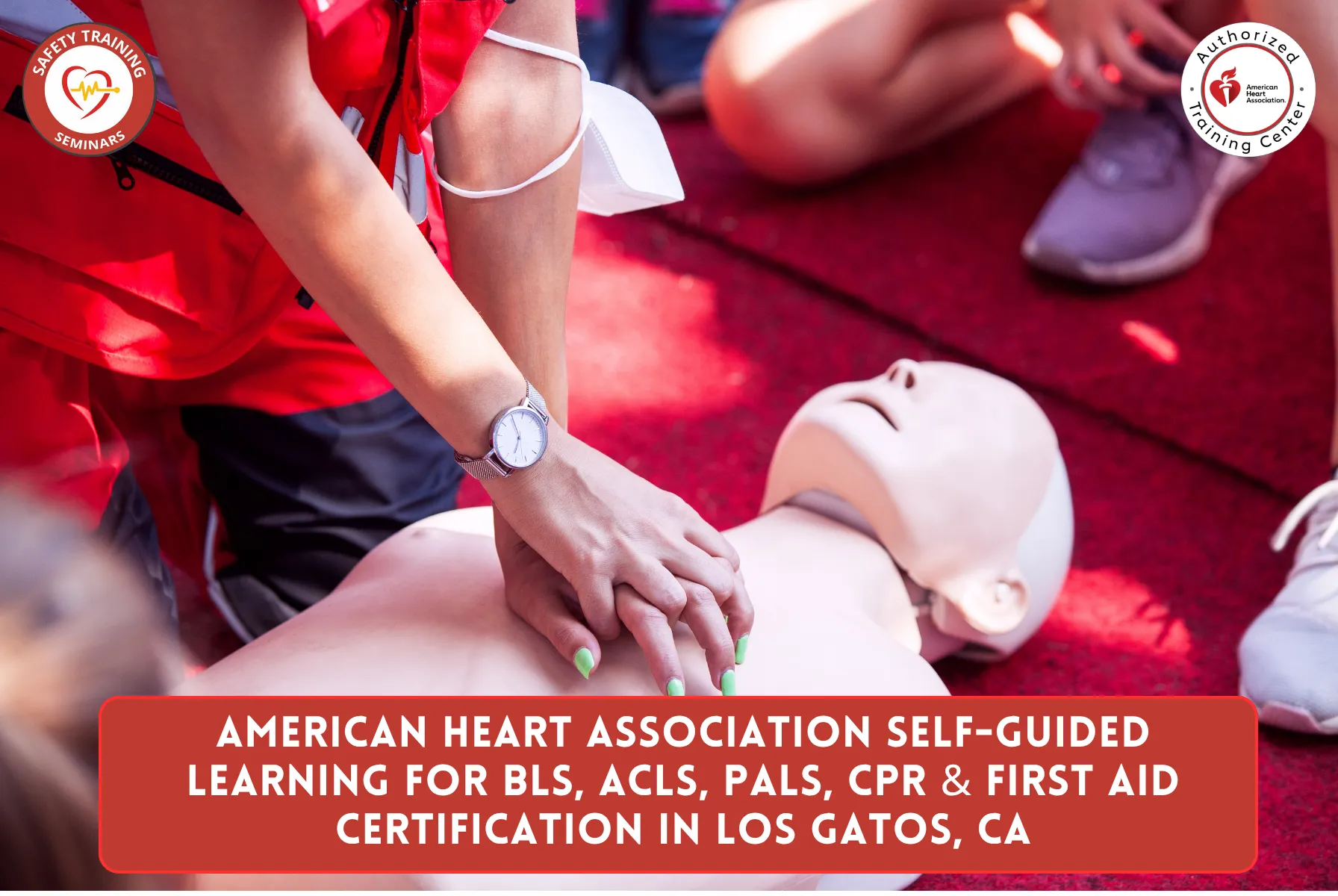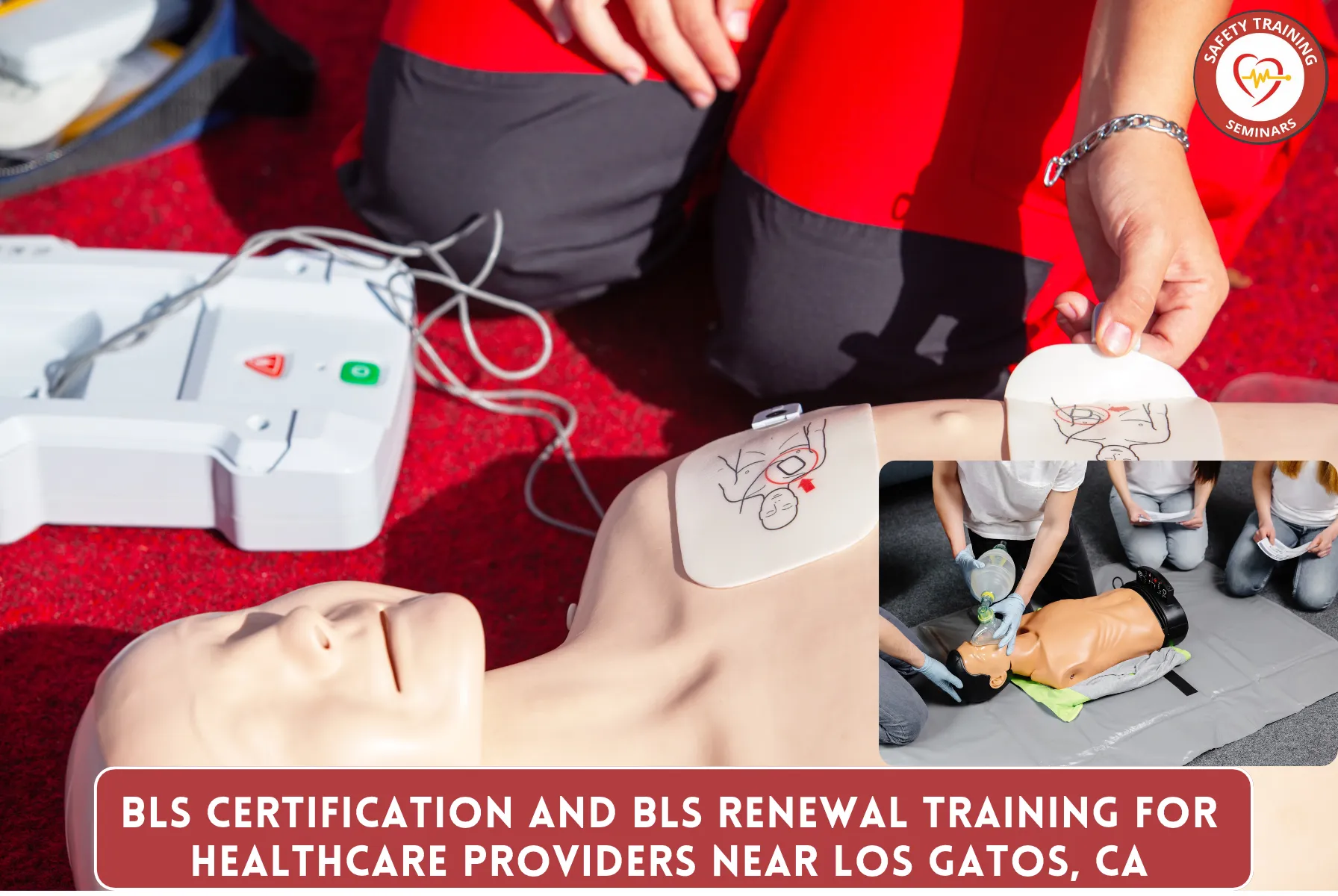
For medical emergencies in Los Gatos and the West Valley area of Santa Clara County as a whole, quick, coordinated action is needed before advanced life support teams appear. When a cardiac arrest happens in a surgical recovery bay near Samaritan Drive, an outpatient specialty clinic along Los Gatos Boulevard, or a dental operatory in the downtown district, the first responders must be trained professionals who know how to perform CPR.
To stay clinically ready, nurses, doctors, medical assistants, dentists, and allied health students working or training in the area need to keep their BLS certifications up to date and get initial Basic Life Support (BLS) training. Healthcare workers need to know what the American Heart Association (AHA) BLS Provider curriculum includes and how to choose between initial training and renewal. This way, they can be ready to help and still meet their company’s paperwork needs.
Core Clinical Competencies of Basic Life Support (BLS)
Basic Life Support (BLS) is the foundation of emergency resuscitation for healthcare professionals and public safety personnel. Unlike general-public CPR courses designed for lay rescuers in community or workplace settings, an AHA BLS course focuses on clinical assessment, high-performance cardiopulmonary resuscitation (CPR), and multi-rescuer team dynamics.
During a comprehensive Basic Life Support training program, healthcare providers practice and demonstrate proficiency across several critical clinical areas:
- Rapid Scene Assessment and Cardiac Arrest Recognition: Checking for responsiveness, assessing normal breathing versus agonal gasps, and simultaneously checking a central pulse (carotid in adults and children; brachial in infants) within 10 seconds to avoid delaying chest compressions.
- High-Quality Chest Compressions: Delivering compressions at the clinically recommended rate and depth across all patient age groups—adults, children, and infants—while allowing complete chest recoil and minimizing interruptions in compressions.
- Effective Airway Management and Ventilation: Utilizing head-tilt/chin-lift or jaw-thrust maneuvers (particularly when cervical spine trauma is suspected) and delivering effective rescue breaths using a pocket mask or bag-valve-mask (BVM) device.
- Automated External Defibrillator (AED) Operation: Applying AED pads appropriately for adult and pediatric patients, clearing the patient during rhythm analysis and shock delivery, and immediately resuming chest compressions post-shock.
- Relief of Foreign-Body Airway Obstruction: Recognizing severe airway obstruction and performing age-appropriate interventions, including abdominal thrusts for responsive adults and children, and back slaps and chest thrusts for responsive infants.
- Team-Based Resuscitation Dynamics: Coordinating roles during a code or emergency response—such as compressor, airway manager, AED operator, and team leader—using closed-loop communication to reduce errors under pressure.
Healthcare-Provider BLS vs. General-Public CPR
Healthcare professionals entering new roles or renewing expiring documentation sometimes ask whether a standard workplace CPR class will satisfy clinical expectations. In nearly all medical, dental, and clinical training environments, general lay-rescuer CPR is insufficient.
| Feature | AHA BLS Provider Course | General-Public / Heartsaver® CPR |
| Target Audience | Nurses, physicians, EMS, dentists, medical assistants, healthcare students | Teachers, fitness instructors, corporate staff, childcare workers, lay bystanders |
| Pulse Check | Required (carotid/brachial check within 10 seconds) | Not taught; relies on responsiveness and breathing checks alone |
| Ventilation Devices | Bag-valve-mask (BVM) and pocket mask techniques | Hands-only CPR or basic pocket mask breaths |
| Resuscitation Format | Single-rescuer and multi-rescuer team dynamics | Primarily single-rescuer response |
| Clinical Context | In-facility and prehospital healthcare settings | Workplace, school, and community environments |
Selecting the right course depends entirely on your clinical role, employer onboarding policies, or academic program guidelines. If your job description involves direct patient care or clinical rotations, a healthcare-provider BLS course is typically the expected standard.
Navigating Initial BLS Training vs. BLS Renewal
Healthcare providers seeking BLS classes near Los Gatos generally fall into two categories: those taking BLS for the first time and experienced clinicians renewing an existing course completion record.
Initial BLS Course Considerations
An initial BLS Provider course is designed for individuals who have not previously completed an AHA BLS course, those whose prior course completion eCard expired long enough ago that their facility requires a full foundational review, or learners who prefer thorough exposure to every skill module.
Common candidates for initial training include:
- Pre-licensure nursing students and medical assistants preparing for clinical rotations.
- Dental hygienists, dental assistants, and newly licensed dentists establishing clinical compliance.
- Physical therapists, occupational therapists, imaging technicians, and pharmacy staff transitioning into patient-facing roles.
Initial training walks learners systematically through adult, child, and infant resuscitation algorithms, allowing time to build muscle memory on compressions, BVM ventilation, and AED integration before completing formal skills testing.
BLS Certification Renewal for Experienced Clinicians
BLS Certification Renewal is tailored for practicing healthcare professionals who already hold a current or recently expiring AHA BLS Provider course completion record and need to refresh their knowledge, review any updated resuscitation science, and complete a hands-on skills evaluation.
Because resuscitation guidelines evolve based on ongoing cardiovascular science—and because psychomotor CPR skills naturally degrade without regular practice—renewal training reinforces proper compression depth, ventilation timing, and team communication.
Before enrolling in a renewal option, healthcare providers should verify two details:
- Current Course Completion Date: Check the issue and recommended renewal dates listed on your existing AHA Course Completion eCard.
- Institutional Policies: Confirm with your hospital human resources department, clinic manager, or school program coordinator whether they accept a standard renewal pathway or require a specific course format regardless of your prior eCard status.
Why BLS Readiness Matters Across Los Gatos Healthcare Settings
Los Gatos serves as an important healthcare hub for West Valley communities, including Monte Sereno, Saratoga, Campbell, and the Santa Cruz Mountains corridor. Clinical teams across the town operate in diverse environments where rapid emergency response is essential:
- Acute Care and Hospital Departments: Major medical centers serving the Los Gatos community—such as El Camino Health’s Los Gatos Hospital campus on Pollard Road and Good Samaritan Hospital just across the border on Samaritan Drive—rely on nurses, respiratory therapists, physicians, and clinical technicians who maintain active BLS readiness alongside specialized life support skills.
- Outpatient Surgery and Specialty Clinics: Ambulatory surgery centers, cardiology practices, urgent care clinics, and diagnostic imaging facilities throughout Los Gatos manage high volumes of outpatient procedures where an acute cardiac or respiratory event requires immediate stabilization prior to EMS transport.
- Dental and Oral Surgery Practices: Dental offices in Los Gatos administering local anesthetics or sedation rely on coordinated staff responses to recognize airway compromise or sudden cardiac arrest early.
- Regional Nursing and Allied Health Programs: Students attending nearby institutions such as West Valley College in Saratoga, De Anza College in Cupertino, or San José State University frequently commute through the West Valley and must present verified AHA BLS documentation before beginning clinical placements at local hospitals.
(Note: Healthcare facilities and educational institutions maintain independent compliance policies; healthcare providers and students should always confirm specific training requirements directly with their employer or academic coordinator.)
Understanding AHA Course Formats and Completion Documentation
The American Heart Association offers flexible pathways to complete the BLS Provider curriculum while maintaining uniform clinical standards.
Blended Learning: HeartCode® Complete
For busy clinicians balancing shift work, family schedules, and continuing education, the AHA’s HeartCode® Complete pathway divides training into two parts:
- Online Cognitive Portion: Learners complete self-paced, interactive eLearning modules covering resuscitation science, clinical scenarios, and written exam requirements.
- In-Person Hands-On Skills Session: After completing the online portion, learners attend an in-person skills session to practice and demonstrate high-quality CPR, AED usage, and BVM ventilation on feedback-equipped manikins.
Self-Guided Learning™ and Skills Verification
Many healthcare providers utilize Self-Guided Learning™ paired with a CPR Verification Station™ to complete their hands-on skills check efficiently. Using voice-assisted manikin technology, learners receive real-time audio and visual feedback on compression rate, compression depth, chest recoil, and ventilation volume, ensuring objective measurement of clinical performance.
Course Completion Documentation vs. Professional Licensing
Upon successfully passing both the cognitive assessment and the hands-on skills evaluation, learners receive an official AHA Course Completion eCard.
It is important to distinguish between course completion documentation and state licensure:
- An AHA BLS Course Completion eCard verifies that you have successfully met the learning objectives and skills requirements of the American Heart Association BLS Provider program.
- It is not a state professional license, nor does it grant independent clinical scope of practice. Rather, it serves as the standard documentation hospitals, clinics, dental boards, and academic programs review to verify current resuscitation training.
Local BLS Training Options in Los Gatos
Healthcare providers looking for convenient BLS renewal classes in Los Gatos can access AHA-aligned courses locally through Safety Training Seminars.
Located right in town, the Safety Training Seminars Los Gatos CPR Training Center is situated at:
236 North Santa Cruz Ave, Suite 246, Los Gatos, CA 95030
Medical professionals who work in downtown Los Gatos, along Los Gatos Boulevard, or near the Highway 17 and Highway 85 corridors will find this central site off of North Santa Cruz Avenue easy to get to. Safety Training Seminars offers American Heart Association BLS courses, such as HeartCode® Complete pathways using Self-Guided LearningTM and CPR Verification StationTM technology. Upon successful completion, the company sends out official AHA Course Completion eCards.
Because course formats, availability, and schedules change, healthcare professionals should check out the current class choices on the Los Gatos course page and check with their employer or school before registering to make sure they meet any specific format requirements.
Frequently Asked Questions About BLS Training Near Los Gatos
Where can healthcare providers take BLS classes near Los Gatos, CA?
Healthcare providers can complete AHA BLS training locally at the Safety Training Seminars Los Gatos CPR Training Center, located at 236 North Santa Cruz Ave, Suite 246, Los Gatos, CA 95030. Current course schedules, formats, and registration details are listed on the official Los Gatos BLS course page.
What is the difference between an initial BLS course and BLS renewal?
An initial BLS course is designed for first-time learners or individuals whose previous training has lapsed beyond their organization’s renewal window, offering comprehensive foundational instruction across all resuscitation modules. BLS renewal is designed for current healthcare providers who already understand BLS protocols and need to review updated guidelines and pass a hands-on skills assessment to maintain current documentation.
Does an AHA BLS course cover adult, child, and infant CPR?
Yes. The AHA BLS Provider curriculum covers single-rescuer and multi-rescuer CPR, AED use, bag-valve-mask ventilation, and choking relief for adults, children, and infants.
Is a BLS course required for nursing and medical assistant students in the West Valley?
Most nursing, medical assisting, dental hygiene, and allied health programs require students to hold a current AHA BLS Provider Course Completion eCard prior to entering clinical rotations. Students should verify their program’s exact documentation rules—including whether blended learning formats are accepted—before enrolling.
What do I receive after completing an AHA BLS course?
Learners who successfully satisfy both the cognitive exam and the hands-on skills verification receive an official American Heart Association BLS Provider Course Completion eCard, which can be shared electronically with employers, licensing boards, or clinical coordinators.
Prepare for Your Next Clinical Shift in Los Gatos
Keeping up with Basic Life Support training keeps patients safe and makes healthcare teams in Los Gatos and Santa Clara County stronger. If you are a healthcare provider looking to take your first CPR course before clinical rotations or renew your BLS certification, the Safety Training Seminars Los Gatos training center at 236 North Santa Cruz Ave, Suite 246 is the place to go. Check with your school to see what courses they require and look at the current course offerings.